
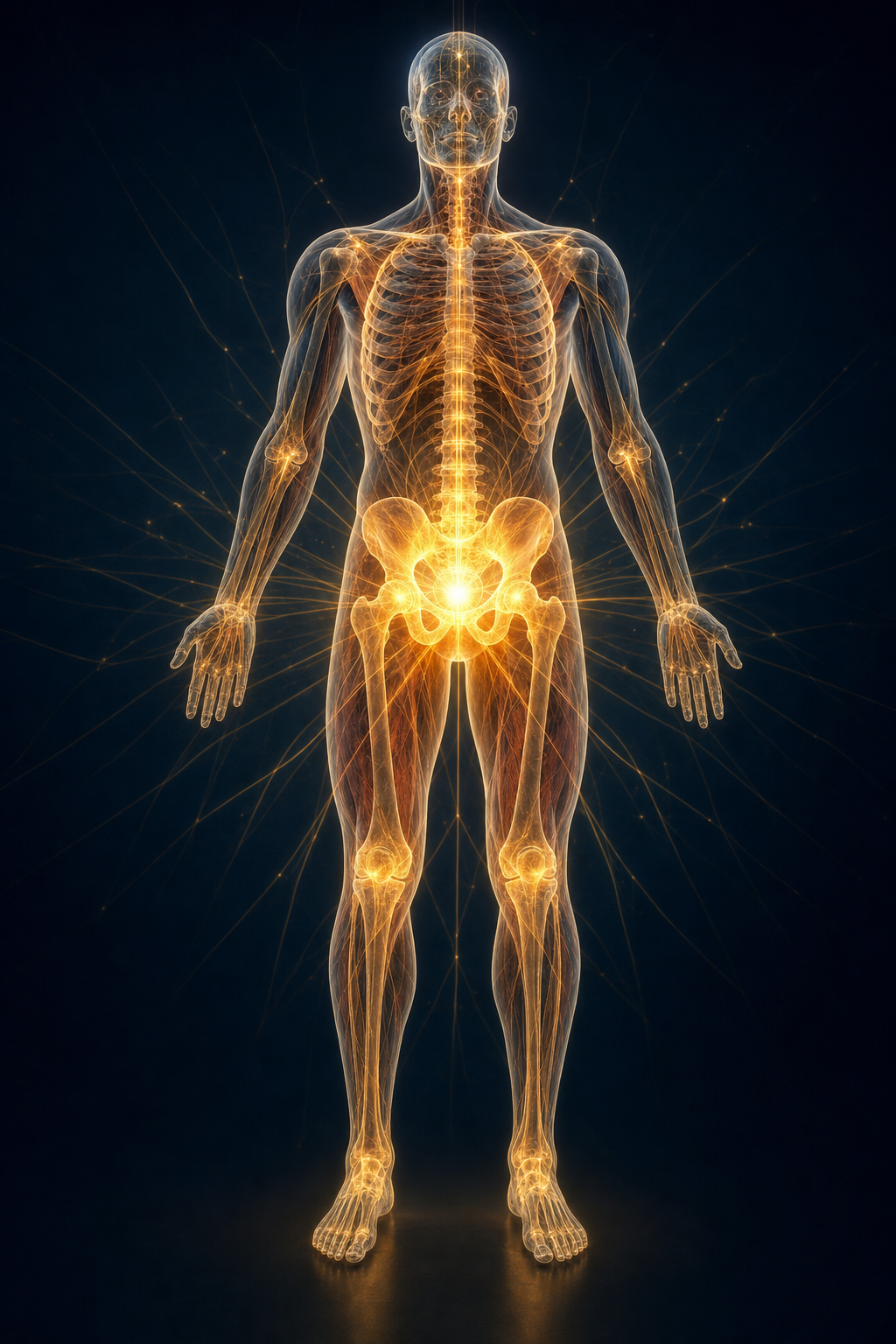
The Hip, the Pelvis, and the Connected Body
The Hip, the Pelvis, and the Connected Body — What the Research Shows
The hip joint is not simply where your leg meets your body. Research in kinesiology, biomechanics, and connective tissue anatomy consistently demonstrates that the hip and pelvic girdle function as the central load transfer point for the entire musculoskeletal system — and that dysfunction here produces measurable effects far beyond the hip itself.

Part 3|3: From Principles to Practice
The first mistake most people make when evaluating research — or when a professional evaluates it on their behalf — is starting too narrow.
Part 2|3: Why a System That Listens to Your Body Beats One That Doesn't
One of the reasons meta-analyses in fitness and human performance produce such inconsistent results is that the training approaches being studied are often fragmented to begin with.
Part 1|3: Why Does the Research Keep Saying It Doesn't Work?
A meta-analysis is a research method that takes multiple existing studies on the same topic and pools their data together to produce one combined conclusion. The idea is sound — if one study has 50 participants and another has 60, combining them gives you a larger sample and theoretically more reliable results.
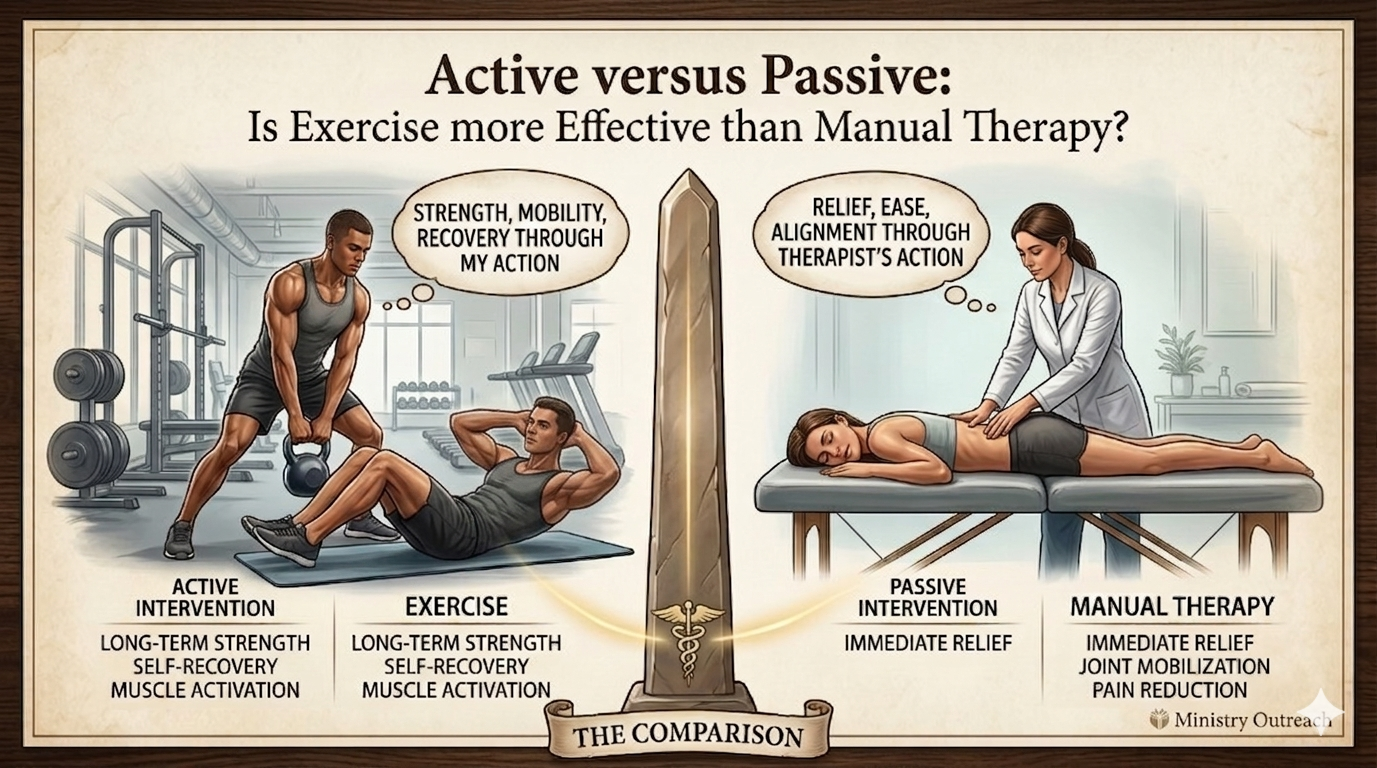
Does It Matter Whether Movement Is Active or Passive?
The idea sounds reasonable on the surface. Moving your body, strengthening it, taking ownership of your recovery — that has to be better than lying on a table while someone works on you, right?

Understanding Vitamins and Minerals
Vitamins and minerals are micronutrients — meaning the body needs them in relatively small amounts, but cannot function without them.